Fight AI with AI: How payments businesses can combat fraud networks
Payment businesses must leverage AI technologies to combat increasingly sophisticated fraud networks and protect digital transactions.
Payment businesses must leverage AI technologies to combat increasingly sophisticated fraud networks and protect digital transactions.

Exploring the shift to digital payments, the role of CBDCs, and the strategic implications for central banks.
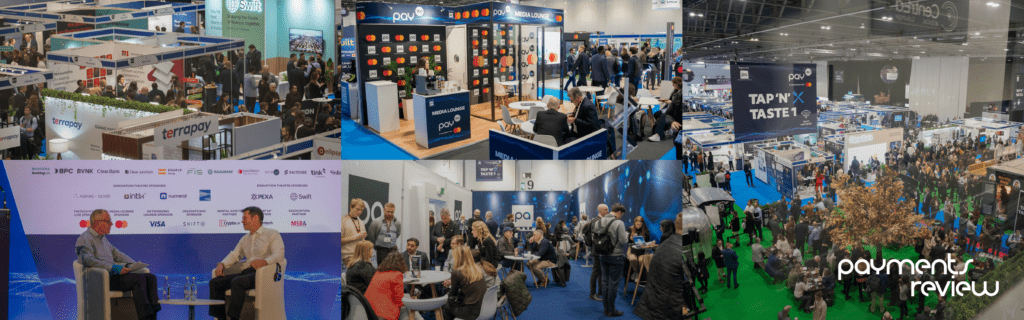
At ExCel London, PAY360 gathered over 4,000 payment professionals to discuss the future of payments, innovation, and regulatory challenges with industry leaders.

A survey from nearly 6,000 PAY360 pre-registrants reveal the strategic outlook, challenges, and opportunities identified by leaders in the payments industry.

The FCA’s final quarterly authorisations metrics for 2023-2024 reveal high efficiency and effectiveness in meeting statutory targets, though some areas require better application quality.

At PAY360, video interviews with industry leaders highlighted the evolution of payment technologies, ESG integration, and digital accessibility.

On 25 April 2024, the FCA proposed significant updates to its Financial Crime Guide, aiming to enhance clarity and compliance for financial and cryptoasset firms.

Digital wallets are rapidly evolving, increasingly centralising essential personal functionalities like payments, identity verification, and data control, highlighting both immense potential and significant risks.

His Majesty’s Treasury is developing a vision and strategy for UK payments. This could herald a period of leadership of payments by the Government – if the ingredients are right.

IOSCO’s new policy recommendations aim to create a unified global framework for regulating digital assets and cryptocurrencies, enhancing market integrity and investor protection.

With the UK’s financial watchdogs set to establish a regulatory regime for stablecoins, payment service providers must brace for stringent new standards in operations, redemptions, audits, and consumer protection.

The UK and EU are set to implement Confirmation of Payee (CoP) and Verification of Payee (VoP) by 2025 to enhance payment security by verifying account details to reduce fraud and errors.

The PAY360 survey reveals critical insights on AI, real-time payments, and regulatory challenges, guiding stakeholders in adapting to evolving industry demands.

The 2024 assessment reveals evolving financial crime trends, including AI fraud and social media exploitation, providing crucial insights for payment firms to fortify consumer trust and operational security.

The UK Financial Conduct Authority issued a supervisory notice to EPayPro UK Limited, stressing the need for fairness and transparency in fee introductions, following EPayPro’s non-compliant rollout of a new compliance fee

A look inside the innovative work of the ESG working group, as it creates the first greenhouse gas emissions standard designed specifically for the payments industry

Initial assessments of the FCA’s Consumer Duty show that while financial firms have made positive strides in improving practices for consumer outcomes, further improvements and deeper integrations are necessary.

Unveiling the complexities and optimisation opportunities in the card payments industry’s operational landscape.

Exploring how the payments industry can innovate to mitigate the UK’s cost of living crisis, this article highlights fintech’s role in aiding the newly underserved towards financial resilience and inclusivity

In an era where customer focus, innovation, and the challenge of profitable growth take center stage, the payments industry faces a pivotal transformation, signalling the end of ‘easy growth’ for traditional giants

Leaders of companies operating in the payment technology landscape are well-accustomed to the challenges of complex regulations set by various governing bodies. Whether the companies are established financial institutions or agile fintech start-ups, navigating this terrain requires much effort.
In 2021, the Financial Conduct Authority (FCA) Business Plan made clear its intent to apply a more intensive assessment with greater scrutiny of financial information and business models. This is being particularly felt in the payments space.

The Payments Association is proud to have worked alongside UK Finance, Digital Pound Foundation, TheCityUK, Innovate Finance and City of London Corporation, and supported by CryptoUK, CMS, Clifford Chance, Greengage,

Plenty has happened in the payments space over the past 12 months. Landmark legislation has been passed and new technologies such as artificial intelligence (AI) have integrated themselves further, irreversibly changing the way transactions will be made. As the year draws to a close, we take a look at other triumphs and challenges faced by the industry in the past 12 months.

While there is efforts by the BRICS countries to reduce their dependency on the US dollar as the global reserve, experts cast doubt whether the process of de-dollarisation could actually be help ease payment friction.

The UK holds a strong position in the rapidly developing fintech and digital payments world, but experts are divided over whether this will lead to a major breakthrough next year.

It’s not easy being green, especially when environmental, social and governance (ESG) obligations are mounting amid an uncertain economic picture. But businesses can no longer ignore the voices of consumers worldwide who are demanding immediate and impactful climate actions – and this is where fintechs have a vital role to play.
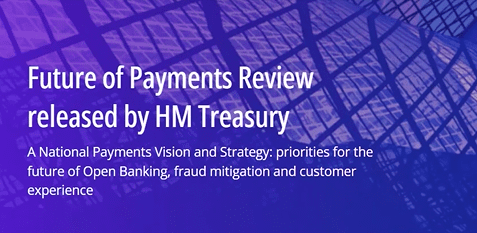
As part of yesterday’s 2023 Autumn Statement, the Future of Payments Review was published. Commissioned by HM Treasury and led by Joe Garner, the review provides a number of recommendations on the

The UK government has taken a significant step towards clarifying its stance on the regulation of cryptoassets, digital settlement asset firms, and fiat-backed stablecoins by publishing key documents outlining their responses to recent consultations.
The FCA recently published its latest guidance on detecting and preventing money mules. This came off the back of the national Economic Crime Plan 2 and Fraud Strategy that has been introduced to focus on disrupting money mule activity.

The Payments Association’s George Iddenden sat down with Intellias senior vice president and global head of sales Olaf Baunack to discuss how his company helps financial services firms use ecosystems to their advantage.

Jonathan Tyce speaks to Nexi’s Tommaso Jacopo Ulissi on how the paytech firm is driving innovation in the sector and what this could mean for the use of digital currencies.

The emergence of Web3 is just one of the technological evolutions that could be pivotal, which is why banks and payments firms need to start now to understand its core values.

Pavlo Khropatyy explains how banks should embark on the journey of digital transformation, keeping their customers firmly at the heart of their strategies.

With big tech entering the banking space, payment firms need to be at the forefront of changing the ‘software sabotage’ culture to ensure consumers and those in the supply are protected as well as reducing e-waste.

James Hunt of Feedzai discusses the evolution of acquiring banks and PSPs.

Monica Eaton explores how augmented reality is used in the marketplace and what impact it might have on the payments industry.

With purpose-built regulation set to come into force in the EU next year, can the UK catch-up and offer clear guidance for crypto and stablecoin issuers.
The Financial Conduct Authority (FCA) has issued a final warning to cryptoasset firms involved in marketing their services to UK consumers, including those based overseas.

FIS senior sales executive Julien Farley discusses why he believes that the payment industry should adopt a more open-minded approach to the different payment methods that are used worldwide.

On Thursday last week, The Payments Association presented the launch of its latest report ‘Navigating the rising cost of living: Payments innovation as a game-changer’ at Parliament to a range of representatives from the House of Commons, House of Lords, and industry bodies including…the HMT, the FCA, BoE and the PSR.

With earnings trends and guidance discussed by the biggest payment firms globally during half year earnings, Jonathan Tyce analyses what this means for the industry and the outlook into 2024.

The introduction of a digital pound is an opportunity to reform the financial system and make finance more accessible and inclusive.
Eduard Stringer, director of product management for Europe at FIS, explains why he believes the EU needs to step up and ensure regulation supports the needs of payments businesses and consumers.

The news that Visa has expanded its stablecoin settlement pilots as part of a push to modernise cross-border payments has been recognised as a landmark moment by payments insiders.

With the payments industry driving towards faster and cheaper ways to transfer funds, attendees at a Payments Lab session discuss whether atomic settlement could be the next big thing.
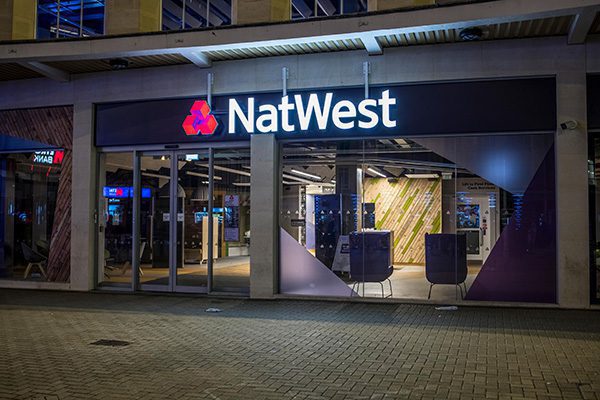
After an embarrassing scandal which saw Coutts CEO Peter Flavel and NatWest boss Alison Rose both leave their positions over the closure of Nigel Farage’s bank account, the UK banking sector may now be forced to react.

Companies spend £125 billion each year enabling people to pay and get paid securely, quickly and conveniently. The UK’s payment sector employs over 100,000 people from more than 500 companies.