Biggest gap, smallest budget: UK financial crime’s data-sharing problem
UK financial crime leaders see AI fraud accelerating faster than controls, while data sharing remains a major challenge but an investment gap.
UK financial crime leaders see AI fraud accelerating faster than controls, while data sharing remains a major challenge but an investment gap.

Payments isn’t converging on one trend. New data shows a market split between AI ambition, cross-border growth and mounting operational pressures.

Our Financial Crime 360 report reveals rising fraud risks, uneven tech readiness, regulatory divides, and strong investment ahead.

The Financial Crime 360 report reveals rising fraud risks, uneven tech readiness, regulatory divides, and strong investment ahead.

Our Financial Crime 360 report reveals rising fraud risks, uneven tech readiness, regulatory divides, and strong investment ahead.

Our Financial Crime 360 report reveals rising fraud risks, uneven tech readiness, regulatory divides, and strong investment ahead.

A global survey of 260+ leaders reveals payments at a crossroads: AI opportunities, rising fraud risks, skills shifts, and strong optimism.

The 2025 Consumer Behaviour Survey shows UK payments are fragmenting, with security, inclusion, and tailored engagement key to adoption.

Trust Payments CEO Laurence Booth urges providers to go beyond transactions, focusing on digitisation and personalisation to meet evolving consumer and business demands.
The payments and fintech sectors are evolving at breakneck speed in 2024. This rapid change ushers in new technology that brings with it ever-advancing challenges in combating financial crime, where

In a speech in April 2024, Simon Stiell, Executive Secretary of the United Nations Framework said the next two years are “essential in saving our planet”. Steill laid out a

Trust Payments’ CEO Daniel Holden sat down with the Payments Association’s reporter George Iddenden to discuss the benefits of converged commerce and how businesses are leveraging unified technology to streamline transactions and enhance customer satisfaction.

Software as a service (SaaS) has sparked a paradigm shift in the corporate domain in the past five years, revolutionising pivotal industries like finance, transactions, and insurance.

A lot has gone on in the payments sector in the last 12 months, but have you been paying attention? There’s only one way to find out, we’ve devised a quiz to test your mettle below.

Open banking — a promised financial utopia where data flows freely, consumers reign supreme, and businesses can reduce their payment processing fees — but what use is this powerful innovation if you can’t get customers to actually adopt it?

Today, The Payments Association head of policy and government relations, Riccardo Tordera attended the release of Visa’s report, Payments: Putting customers first at the offices of EY.

The Bank of England (BoE) and the Financial Conduct Authority (FCA) have taken a significant step in addressing the rapid growth of stablecoins and related payment services in the financial sector by publishing its proposed regulatory regime.

The Payments Association is pleased with the declaration released from the recent summit on artificial intelligence (AI) at Bletchley Park, which saw global leaders, tech executives, and academics address the challenges and advancements of the technology.
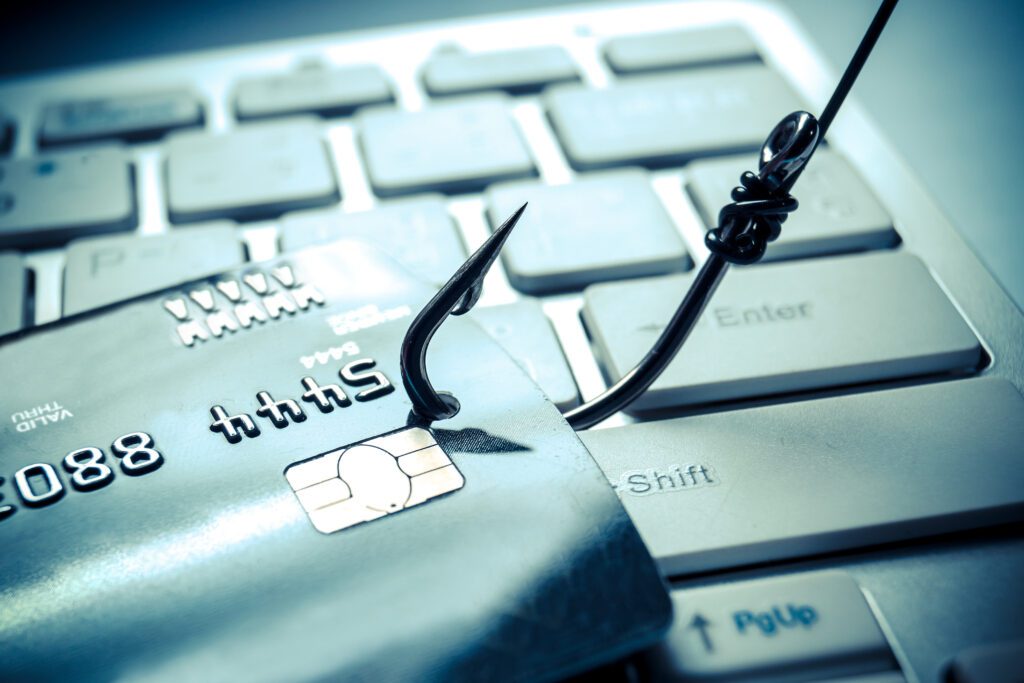
The Payment Systems Regulator (PSR) has published its report detailing the latest data on the pressing issue of APP fraud scams.

The UK government has taken a significant step towards clarifying its stance on the regulation of cryptoassets, digital settlement asset firms, and fiat-backed stablecoins by publishing key documents outlining their responses to recent consultations.

With big tech entering the banking space, payment firms need to be at the forefront of changing the ‘software sabotage’ culture to ensure consumers and those in the supply are protected as well as reducing e-waste.

Key industry stakeholders discuss the challenges, opportunities, and future of digital assets in the UK, at an event hosted by Ripple and The Payments Association.

Chargebacks911’s Monica Eaton examines five ways how businesses can utilise bots and new technology to drive sales online.

With innovation in B2C payments growing at much faster rate, Intellias’s Olaf Baunack debunks the myths associated with B2B payments.

Sean Forward at payabl. explores how the industry could see a rise in M&A activity and a consolidation of businesses and services.

With more and more young people using BNPL as a payment option, Monica Eaton of Chargebacks 911 explores the benefits and risks of using this type of lending to make purchases.

AutoRek’s Nick Botha discusses how the FCA is taking payments safeguarding very seriously and firms should be able to demonstrate robust governance and control frameworks to avoid unwanted consequence.

Charles Radclyffe explores why technology might not be the universal force for good it has always assumed to be and why the sector should be thinking about technology governance to mitigate and manage potential harms.

With the rapid pace of innovation in the cryptoasset ecosystem, Ricardo Tordera discusses why regulation is now more paramount than ever and not just in the UK.
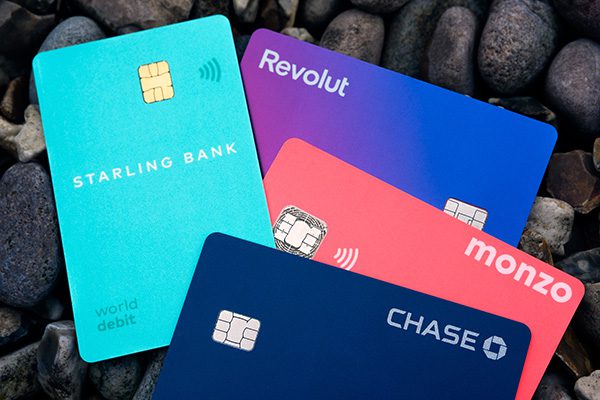
Paymentology’s Martin Heraghty explores how the lending landscape is changing and what this means for consumers.

Peter Harmston and Robert Dean at KPMG UK explore how AI can be adopted to have the biggest benefits for both business and customers.

Lucinity’s Francisco Mainez outlines how technology can help businesses prepare and comply with the new rules, which are due to come into force in July.

Roberto Rivero of Lerex Technology explores the value branded cards could have for businesses.

Alex Mifsud of Weavr.io examines how technological advancements mean that customers can experience seamless banking across financial institutions.
Nikulipe’s Frank Breuss discusses the correlation between a country’s GDP and its accessibility to digital financial services, which suggests fintechs are key to financial inclusion in emerging markets.

Embedded and invisible payments with reduced friction is on the horizon for retail payments, but players across the chain must not forget why there is friction. Santander’s chief payments officer Paul Horlock dives into what’s next.
Financial columnist Matthew Lynn discusses how digital IDs could open up market competition.

With the UK government launching a second phase consultation on the future of cryptoassets, Max Savoie and Martin Dowdall of Sidley Austin examine what this means for firms.

With myths on digital currencies being a threat to financial freedom dominating social media, Dominika Duziak, of OneStep Financial, explains why government must address this narrative and discuss its advantages.

Phil Mochan from Nomos Digital examines how cross-border payments is closely intertwined with cross-border liquidity and the challenges this poses for implementing CBDCs.

From a once ‘poor man’s card’ to paving the way for a new way to earn, Richard Ney examines how prepaid products are being used to underpin some of the slickest payment solutions and user experiences.

The Payments Association’s members and invited guests came together to celebrate Christmas in style on 6 December, as well as getting a unique opportunity to meet the association’s newest Advisory Board members and the new chair of the judges of the PAY360 Awards, Laura McCracken and the new deputy chair of the judges, Mike Chambers.
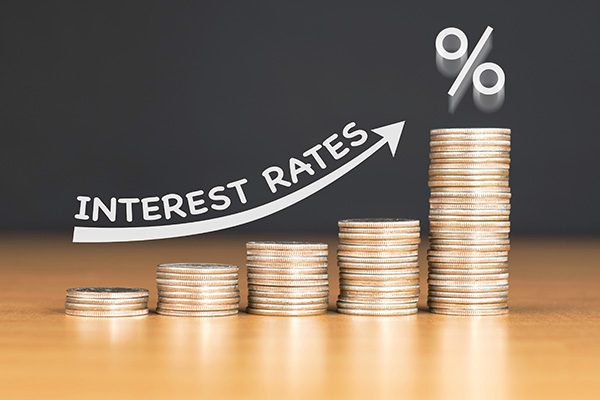
Spencer Hanlan explores how the speed and efficiency of payments, particularly cross-border, could drive innovation to offset inflation. He sets out his top three predictions of 2023.

For decades – centuries even – businesses had one goal: maximise profits for shareholders. Whether these shareholders were a single capitalist or thousands of shareholders, the goal was always to
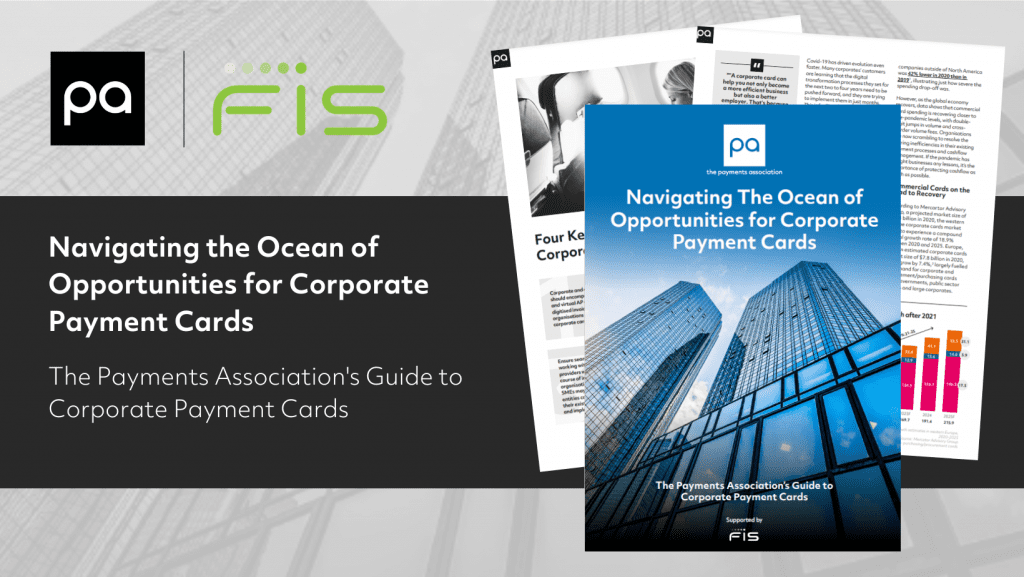
The Payments Association’s recently issued report, Navigating the New Opportunities for Corporate Cards, takes a close look at the world of corporate card payments, finding that there is much to do to make them as seamless as personal payments or even those for small businesses, but that there are innovative FinTechs who are solving the specific problems of making payments in a business setting.
It’s time for another monthly #DearLuc, payments agony uncle, with Moorwand CCO Luc Gueriane and FinTech Futures! This week a fintech founder has asked about Buy Now, Pay Later (BNPL) and how they can get a piece of the action. Luc describes some of the key considerations to keep in mind when a card programme provider is looking to add BNPL to their service.

In a recent article on The Fintech Times, Ian Kerr, a Director of Business Development for Episode Six, discussed why crypto and DeFi isn’t just a fad, but something that will remain for a long time. If banks do not respond to it, they will face the consequences in the future.