The hidden costs of payment operations
Staying compliant with fast-changing payment network rules is costly and complex—centralising updates can cut risk, save time, and turn compliance into advantage.
Staying compliant with fast-changing payment network rules is costly and complex—centralising updates can cut risk, save time, and turn compliance into advantage.
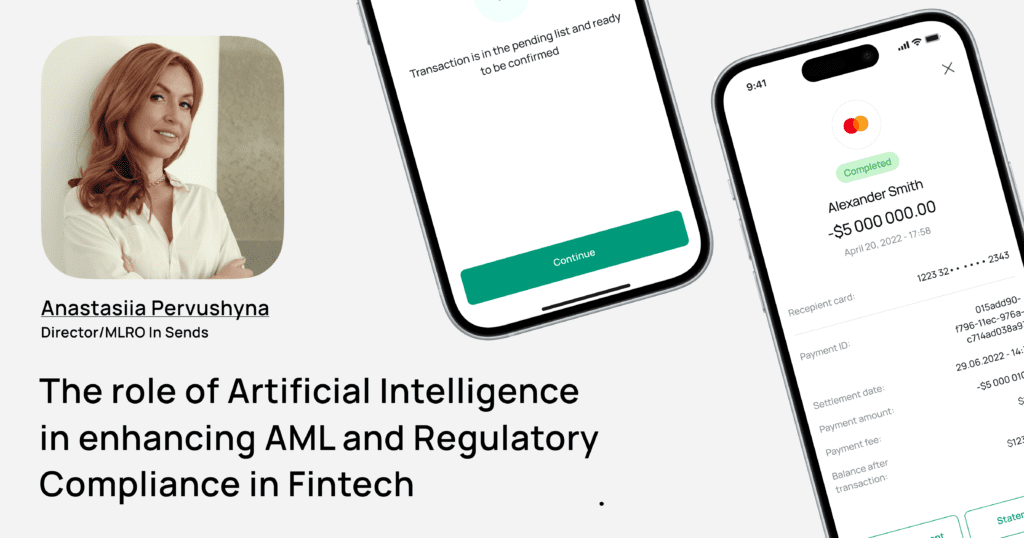
AI is transforming fintech compliance—boosting fraud detection, speeding onboarding, and ensuring regulatory alignment while demanding ethical oversight and balance.

As payments data shifts to strategic intelligence, firms must harness its power for growth or risk being overwhelmed by complexity and compliance.
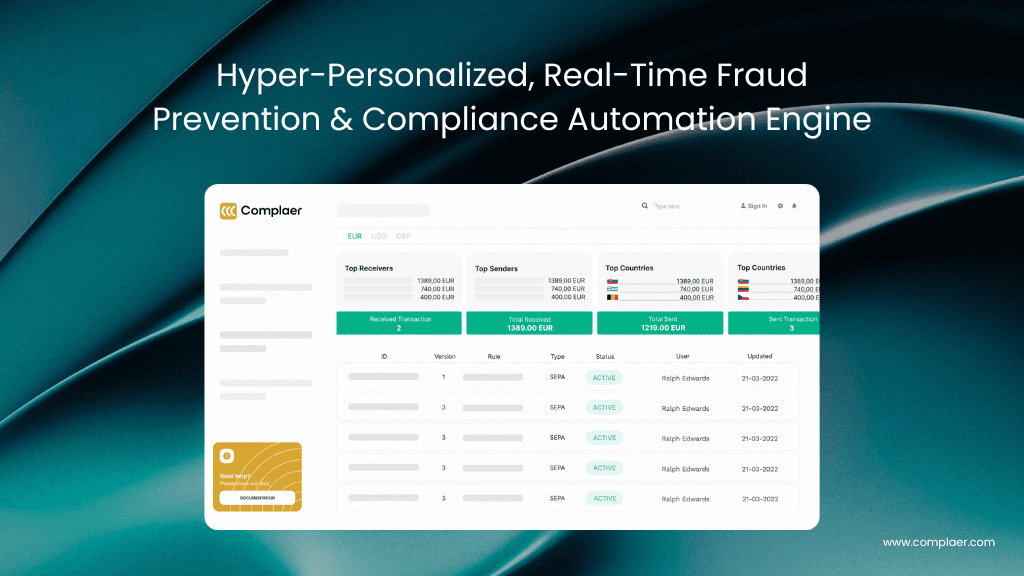
Complaer cuts false positives by 90% and detects fraud in under 10 seconds—empowering compliance teams with real-time, no-code AML across fiat and crypto.

The payments landscape is evolving with digital assets, real-time transactions, and new regulations—businesses must adapt to stay efficient and compliant.

How UK payments regulation can adapt to support innovation, investment, and growth while managing emerging risks.

Merchant category codes (MCCs) impact fees, chargebacks, compliance, and payment approvals—understanding your MCC can help optimise costs and reduce risks.

Why merchant category codes (MCCs) matter—and how choosing the right one can reduce fees, manage risk, and improve payment approvals.

The EBA’s redefinition of e-money challenges traditional models, raising regulatory uncertainties and requiring compliance reassessment.

The Economic Crime and Corporate Transparency Act 2023 holds businesses accountable for fraud unless they prove strong prevention measures.

As crypto reshapes finance, the FATF’s Travel Rule struggles to keep pace—can global regulators close the gap on illicit transactions?

Many payment firms assume they need an FCA licence, but exemptions may allow them to operate with fewer regulatory burdens.
Baker McKenzie’s 2025 briefing covers UK financial regulation trends, including post-Brexit reforms, ESG, crypto, and enforcement.

Regulatory fines in 2024 exposed persistent weaknesses in financial crime controls, highlighting issues in governance, transaction monitoring, sanctions screening, and compliance investment.
By 31 March 2025, UK financial services firms must fully comply with new operational resilience rules, safeguarding critical services and mitigating disruptions.

CP24/20 aligns payment services regulations with the CASS regime, with key impacts to be discussed in an upcoming webinar.
Privat 3 Money partners with KYC360 to upgrade onboarding and compliance processes, aiming to improve efficiency and client experiences.

Clear Junction reveals key challenges payment leaders face in navigating the EU’s new MiCA crypto regulation framework.

The FCA’s safeguarding reforms introduce stricter compliance requirements for payments and e-money firms, aiming to enhance consumer protection and operational resilience.

The Digital Assets Bill introduces opportunities and challenges for PSPs, from stablecoin clarity to operational overhauls, as firms navigate legal uncertainty and evolving compliance standards.

Operational resilience is crucial as FCA and EU regulations push firms to guard against disruptions and cyber threats.

PSD3 and PSR reshape EU payments with stronger protection, competition, and stricter fraud rules, influencing banks and providers.

Payment firms must balance innovation with compliance, while regulators support growth and trust.

Compliance in payment communications is key to trust; AI solutions and customised frameworks ensure secure, global adherence to regional regulations.
The FCA’s CP24/20 proposes significant changes to safeguarding rules for payment and e-money firms, requiring operational and compliance upgrades.

Gladius Assurance has launched a Safeguarding microsite to help firms navigate the FCA’s proposed changes to the Safeguarding Regime outlined in Consultation Paper 24/20.

Webinar: Join Linklaters LLP to learn how upcoming FCA safeguarding rule changes will impact payments firms on Wednesday, 2 October 2024, at 2:00 pm BST.

The merged R&D tax credit scheme in April 2024 introduces new rules for contracted-out R&D, benefiting larger businesses but requiring careful planning and documentation.

The new Reimbursement Claims Management System (RCMS) aims to simplify APP fraud claim processing, enhance PSP cooperation, and ensure adherence to updated compliance standards

New SEPA regulations in 2024 will require instant payments, fee parity, and improved fraud prevention, posing compliance challenges for financial institutions.

Payment companies are accelerating KYB with AI and APIs, enhancing onboarding speed and competitiveness while maintaining strict compliance.

Banks must quickly adapt to ISO 20022, leveraging strategic partnerships to overcome legacy system challenges and meet the March 2025 compliance deadline.
Thistle Initiatives has announced the expansion of its financial crime services to support fraud challenges

Swift’s updated CSP and IAF are essential for ensuring robust cybersecurity and compliance across the global banking community.

Fscom is hosting a webinar session discussing the FCA’s upcoming safeguarding consultation, exploring key implications and considerations for the industry.

Sanctions and counter-terror finance (CTF) screening have become a more demanding area of compliance. Sanctions lists used to be relatively static. Following the Russian invasion of Ukraine, they are now

ProID and Monet+’s free virtual conference will delve into the evolving landscape of digitalisation in critical sectors, focusing on the impact of new EU eIDAS 2.0 regulations on digital identity and electronic signatures.

PSPs must enhance their end-to-end reconciliations to deliver seamless, efficient payment services and stay competitive in the rapidly evolving fintech landscape

As the crypto market continues to innovate and grow, governments and regulators around the world are struggling to keep pace. The constantly shifting policy and regulatory landscape is also challenging

With less than five months to go before the first set of Consumer Duty annual board reports must, at the latest, be presented to managing bodies, work is, or should

In its recent annual briefing on financial services regulation and enforcement for 2024, Baker McKenzie details the anticipated developments and enforcement trends within the sector. Titled “What does 2024 hold?

Leaders of companies operating in the payment technology landscape are well-accustomed to the challenges of complex regulations set by various governing bodies. Whether the companies are established financial institutions or agile fintech start-ups, navigating this terrain requires much effort.

Payment compliance and risk management is expensive and time-consuming due to its multifaceted and idiosyncratic nature. There is no one-size-fits-all solution. The state of risk and compliance is ever-changing, and

Napoleon understood the importance of resilient supply chains as his Grande Armée spread across Europe. Today, payment firms are being told to improve the resilience of their operations by overseeing

Banks and finserv companies have a significant task in 2024 when it comes to building and retaining consumer trust. This is concerning news because it’s easier than ever for customers to switch banking providers.

The payments sector’s success and growth over the past decade can largely be attributed to firms’ ability to meet and exceed customer’s expectations. Unlike established banks, fintechs are largely free from the legacy tech stacks that slow down banks from modernising. So Payment Service Providers (PSPs) can anticipate customer needs and provide services that address their problems. However, as new PSPs continue to emerge, the landscape is becoming increasingly competitive. So PSPs have to meet changing customer expectations more quickly.

The upcoming arrival of the Digital Operational Resilience Act (DORA) on 17 January 2025 will end the fragmentation of legal obligations for ICT processes and security. By then, financial entities

Cellbunq, a leading platform provider for B2B and B2C onboarding, is announcing its latest feature to its compliance platform; a merchant onboarding system that can be completed in less than