
AI is reshaping discovery, and poor data signals can misrepresent brands—making clear, consistent content critical for visibility in AI-driven search.
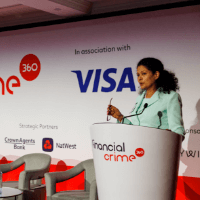
At a recent Breakfast in the Boardroom session hosted by The Payments Association, the conversation took an unexpected turn.
The room was full of fintech marketing leaders discussing the usual topics: events, paid media, executive visibility on LinkedIn, and the never-ending challenge of producing enough quality content.
Then someone asked a question that briefly silenced the room: “Why does ChatGPT so badly misunderstand my company?”
It sparked immediate recognition. Heads nodded. Stories followed.
One marketer explained that AI tools used outdated information to describe their company. Another said ChatGPT confused their brand with a competitor. Someone else admitted that when they asked AI assistants about their sector, their company didn’t appear.
It was funny. Slightly alarming. And incredibly revealing.
Because it highlights a shift that many marketers are only just noticing.
People aren’t just searching anymore.
They’re asking AI.
The new discovery journey
For most of the past two decades, digital visibility meant one thing: ranking on search engines.
Entire marketing strategies were built around SEO—keywords, backlinks, domain authority, and content optimisation—all designed to secure a place on the first page of results.
But the way people look for information is evolving.
Instead of typing queries into Google and clicking through links, people are increasingly asking AI assistants questions like:
“What payment events are happening in the UK this year?”
“Which payment processor is best suited to my business?”
“Who is the leading BaaS provider?”
The assistant doesn’t return ten links. It generates a single answer. That answer might mention a handful of brands.
If yours isn’t one of them—or arguably worse, if the AI describes your company incorrectly—your visibility problem suddenly looks very different.
Not a search issue. An AI visibility issue.
And it’s not just early adopters experimenting with new tools. AI-assisted search is rapidly becoming part of everyday behaviour. Recent UK Government research suggests more than half of UK adults now use AI tools when researching information, and among younger professionals—the future decision-makers of fintech—around three quarters of 18–34-year-olds already rely on them when searching for products, services, or advice.
So, when someone asks an AI assistant about your sector, your brand may now be discovered – or overlooked – inside that answer.
AI is Already Embedded in Marketing
Interestingly, marketers themselves have embraced AI faster than almost any other business function.
Across the industry, around 94% of organisations now use AI to prepare or execute marketing activity, from analysing data to generating campaign ideas. For many teams, these tools are no longer experimental – they’re everyday infrastructure, with roughly 88% of marketers using AI or marketing automation in their daily workflows.
We rely on it to uncover insights faster, personalise campaigns at scale, and generate content more efficiently.
But while marketing teams have quickly adopted AI behind the scenes, fewer have considered how AI is shaping how their brand is interpreted externally.
Which is why that Breakfast in the Boardroom question resonated so strongly. When someone finally asks an AI assistant about their company, the response can be…surprising.
Sometimes the description is outdated. Sometimes it’s incomplete. Occasionally, it’s just wrong.
And that’s when the realisation lands: if AI is becoming a discovery channel, brands need to think about how they show up there too.
Why AI sometimes gets companies wrong
The reason isn’t mysterious.
Large Language Models (LLMs) learn by analysing enormous volumes of publicly available information – websites, articles, forums, research papers, and structured data.
If your company isn’t clearly represented across those sources, the AI has to interpret incomplete signals.
That’s when problems start to appear.
Sometimes the model surfaces outdated information. Sometimes it confuses companies that operate in similar niches. Occasionally, it fills gaps with something that sounds plausible but isn’t accurate (also called “hallucinations”).
For fintech companies, this happens surprisingly often.
The sector is full of highly specialised businesses with complex propositions. One company might focus exclusively on embedded finance infrastructure. Another might specialise in open banking APIs, fraud prevention systems, or cross-border payment technology.
To industry insiders, those distinctions are obvious.
To an AI model scanning millions of documents looking for patterns, they can blur together unless they’re explained clearly.
Marketing for humans…and machines
This is where the conversation around AI visibility begins.
Optimising for AI doesn’t mean writing content for robots. It means ensuring your expertise is clearly expressed and consistently reinforced across the digital ecosystem.
The brands that appear most frequently in AI-generated answers tend to share a few common traits.
They publish authoritative content that explains their expertise in layman’s terms. They appear across multiple trusted sources – industry publications, podcasts, conference agendas, and research reports. And they make it easy to understand exactly when they do.
That last point matters more than many companies realise.
Fintech marketing often leans heavily on buzzwords and abstract messaging. But if an AI model cannot quickly determine what your company does, who you serve, or what makes your expertise distinctive, it becomes much harder for that model to surface your brand when someone asks a relevant question.
When it comes to AI discovery, clarity beats cleverness.
Technology is changing marketing—But humans still matter
Of course, AI isn’t just influencing how brands are discovered. It’s transforming how marketing itself works.
Automation tools now allow teams to generate insights faster, personalise campaigns at scale and experiment with new content formats more easily than before.
But efficiency alone isn’t enough, particularly in financial services.
Fintech operates in a space where trust, credibility, and reputation matter enormously. Financial decisions are rarely purely rational; they’re shaped by perception, confidence, and emotional reassurance.
Which is why the most effective strategies combine two complementary focuses:
- AI’s analytical speed & scale.
- Human emotional intelligence & storytelling.
It’s the balance we explore in more depth in our Intelligent, Not Imitated, which looks at how fintech brands can combine Artificial Intelligence with Emotional Intelligence to create marketing that is both scalable and genuinely human.
Making Sure AI Gets Your Company Right
At Blue Train Marketing, we’re helping fintech and payments brands understand how they appear across AI search tools and strengthen the signals that shape those results—from thought leadership and digital visibility to broader AI search optimisation.
If you want to know more about AI optimisation, visit our website or catch us at PAY360 for a chat about how AI visibility is reshaping fintech marketing.