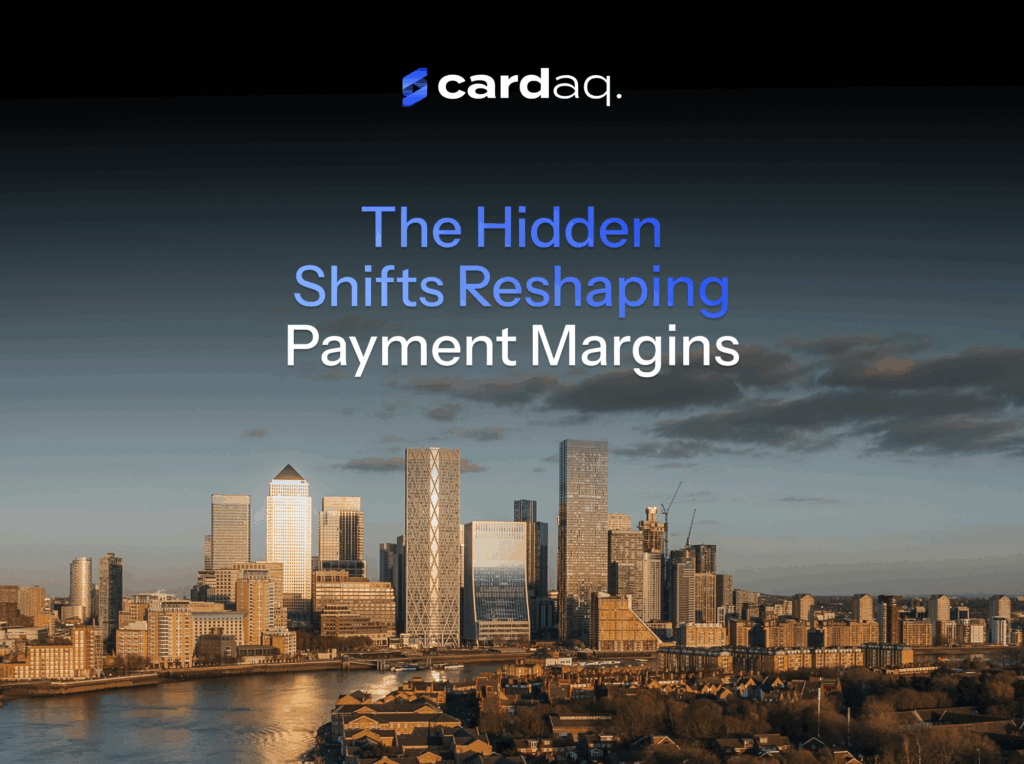
Payment fees were once a fixed cost to be managed. Now they’re a margin variable to be optimised and the operators who understand the difference are quietly pulling ahead. Cardaq breaks down the three structural shifts redefining payment economics in 2025.
At Cardaq, we are observing a fundamental shift in how payment commissions impact operators. What was once a relatively simple blended rate is evolving into a complex structure that directly defines margin. Yet many operators remain unaware of where margin leakage is occurring within their payment stack.
Across much of the industry, payment commissions are still viewed through the lens of a blended rate. However, as fee structures continue to evolve across networks and regions, visibility into the underlying layers has become a genuine competitive advantage rather than merely an accounting exercise. Operators that understand the structural detail behind their costs are better positioned to protect and grow profitability.
Three clear trends are shaping the landscape this year.
Interchange mix is increasingly driving margin variability. The growth in premium and commercial card usage is quietly pushing effective interchange rates higher across many sectors. Businesses that are not actively monitoring their card mix are experiencing margin compression without recognising the cause. In contrast, those analysing interchange by card category and transaction type are better equipped to forecast net revenue accurately, adjust pricing strategies where necessary, and protect margin on higher value transactions.
Processor margins are also coming under greater scrutiny. As infrastructure providers scale, the spread between wholesale cost and applied processing fees is becoming more visible. Businesses that conduct periodic audits of their processor pricing are identifying opportunities to reduce basis points without creating operational disruption. In the current environment, transparency provides leverage, and informed operators are using that leverage to strengthen their economics.
Cross border structures have emerged as a major profit lever. With continued global customer acquisition, many businesses are unintentionally triggering cross border mark ups that materially affect net settlement. Aligning entity structure and local acquiring with customer geography has become one of the most effective ways to reduce avoidable cross border fees, improve authorisation performance, and increase net margin per transaction. For international operators, this is often the single largest optimisation opportunity available.
The practical implications are clear. Payment cost optimisation is no longer about negotiating a lower headline rate. It is about structural alignment. Geography should align with the customer base. There should be clear visibility into interchange composition. Processor spreads should be reviewed and audited regularly.
Businesses that treat their payment stack as a strategic function rather than a back office utility are achieving measurable improvements in profitability. In a margin sensitive environment, that shift in perspective can make a material difference.
Best regards,
Cardaq Team