
Poland is emerging as a credit innovation hub, shifting from product-led lending to real-time, embedded credit driven by digital behaviour and transaction data.
Poland is not always the first market that comes to mind when discussing the future of credit. But it should be.
As has been widely noted, Poland has quietly become one of Europe’s largest and most dynamic economies, now ranking among the EU’s six largest and with a nominal GDP nearing $1 trillion. Yet despite its scale, it is still too often overlooked in conversations about financial innovation.
That is beginning to change.
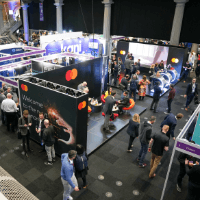
At a recent Fintech Poland Business Breakfast in Warsaw, one thing became clear: what makes this market particularly interesting is the combination of economic maturity and distinct financial behaviour. Poland is a highly digital, contactless-first economy, but unlike markets such as the UK or the US, it is fundamentally debit-led rather than credit-led.
There are over 40 million debit cards in circulation, compared to fewer than 5 million credit cards. At the same time, more than 20 million users actively use BLIK, the country’s domestic mobile payment system, which has become deeply embedded in everyday transactions.
This matters because it shapes how consumers think about credit.
In Poland, credit has never been dominated by revolving credit cards. Instead, instalments and pay-later options have become the norm. Consumers are already comfortable choosing how to pay at the point of purchase, rather than committing to a credit product upfront.
This behavioural foundation creates the conditions for a very different kind of credit model to emerge.
From debit-led behaviour to embedded credit
Rather than being product-led, credit is becoming transaction-led.
What we are now seeing is a shift toward real-time, per-transaction decision-making, where credit is embedded directly into the payment experience. A consumer initiates a purchase and, instead of relying on a pre-existing credit line, is presented with options in that moment: pay now, split into instalments, or defer payment.
This is a significant departure from traditional models. It moves credit away from static products and toward something more dynamic, flexible and contextual.
However, the current ecosystem is not without its challenges. As the market has grown, so too has fragmentation. Consumers often hold multiple agreements across different providers, each tied to specific merchants or platforms. This can create confusion, limit visibility over total exposure and introduce gaps in how risk is managed.
The next phase of evolution is already addressing this.
Modern card platforms enable real-time credit decisions at the point of transaction while consolidating the experience into a single, more coherent journey. This is where the concept of programmable, card-based credit becomes particularly powerful.
In this model, the card itself becomes the delivery mechanism for credit. A consumer can make a purchase using their existing card, and the issuer can dynamically present options to pay immediately or over time. These choices can be made before, during, or after the transaction.
Crucially, this approach removes the need for multiple, disconnected credit agreements. It brings flexibility into a single, consistent experience.
The next step goes further still.
As more transaction data becomes available, credit can become increasingly intelligent. Instead of simply offering options, issuers can begin to guide decisions based on a consumer’s financial behaviour. A transaction can trigger a recommendation that reflects previous spending patterns or preferred repayment levels, helping the consumer manage their cash flow more effectively.
In this sense, credit is evolving beyond a financing tool into something more adaptive and supportive.
Scaling the model: opportunity, fragmentation and responsibility
This shift is already being reflected in how the industry talks about the future. During the event, an attendee captured the direction of travel particularly well. The idea that a consumer could apply for credit while making a morning coffee and receive a decision before finishing it is no longer hypothetical. It is fast becoming an expectation.
At the same time, this transformation introduces new responsibilities.
As credit becomes embedded in everyday experiences, it is no longer confined to traditional financial institutions. Platforms, marketplaces and non-financial brands are increasingly part of the credit journey. When they present these options under their own brand, they are also taking on a share of the responsibility for the outcome.
A well-executed experience can strengthen trust and deepen engagement. A poor one can do the opposite.

There is also a broader shift toward more automated, agent-driven commerce, in which decisions are made on behalf of consumers. While this has the potential to remove friction entirely, it also raises important questions around governance and control. Ensuring the right policies and guardrails are in place will be critical as these models evolve.
Perhaps the most important takeaway is that none of this is theoretical.
Embedded credit, real-time decisioning and new payment experiences are already being built. They are no longer ideas on conference agendas—they are active product roadmaps.
The real question now is not what the future of credit looks like, but who will deliver it, and how quickly.
Poland matters because it brings together three factors that rarely align so clearly: economic scale, strong digital adoption, and a consumer base already comfortable with flexible, embedded credit experiences.