
UK fraud controls have reduced domestic APP scams, but criminals are shifting to smaller institutions and cross-border channels, making consortium data vital for defence.
One year after the UK’s Payment Systems Regulator (PSR) was introduced, institutions are seeing both progress and new challenges. While the regulation has compelled the UK financial industry to adopt improved fraud controls, criminals are now directing payments to smaller institutions and across borders to evade detection.
Consortium data can help institutions effectively respond to this requirement and mitigate the increased risk associated with cross-border payments.
Section 54 and Section 55 of the Financial Services (Banking Reform) Act
As larger institutions have adopted more sophisticated fraud controls, bad actors have shifted their approach to target customers—and often more vulnerable citizens, such as the elderly. This illicit activity amounts to £2.1 billion worth of customer and business fraud annually. For this reason, the PSR introduced a bold policy that shifted the burden of APP fraud from customers to financial institutions. It came into force on October 7, 2024.
The new legislation has reshaped the payments landscape in the UK, requiring a more vigilant approach to protecting customers and preventing scams. The result is a more robust system where consumer interests are prioritised, and financial firms are held to higher standards of accountability.
APP fraud controls, fewer claims
Over the past year, institutions have reimbursed more than £100 million to victims of APP fraud. In most cases, customers were reimbursed quickly; firms resolved a significant number of claims, with 84% resolved within five days and 35% within 35 days. To mitigate further reimbursements, firms have improved their capacity to identify and prevent fraudulent transactions.
The early results show that in-scope APP fraud claims decreased by 15% to 126,000 between October 2024 and June 2025.
For many victims, receiving reimbursement has restored their confidence in their bank, though awareness of the new protections remains low. This underscores the need for ongoing education so more customers understand how APP fraud works and why they are being targeted. Improved access to educational resources will only further reduce the number of fraud claims submitted to institutions.
Cross-border payments & APP fraud
As the UK tightens its defences, fraudsters are adapting. As protections on domestic payments become more effective, criminal networks seek out easier targets. The threat of fraud is persistent; recent data show that while domestic APP fraud in the UK has declined, losses from cross-border scams have increased. Criminals are exploiting international payment channels that lack the same safeguards, making it harder for banks to verify recipients and for victims to recover stolen funds.
This is not just a UK problem. Across Europe, the rapid adoption of instant payments has exposed vulnerabilities in cross-border transactions, especially where real-time analysis tools are missing. Fraudsters are utilising AI tools to commit their crimes on a massive scale, enabling them to achieve the same returns. And once funds cross borders, the chances of recovery drop dramatically. Fraudsters are not limited by geography, but payment protections often are.
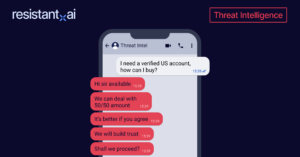
Fraudsters are also becoming more savvy about which UK accounts to target for funnelling funds into. While they are aware that larger banks have greater protections in place, bad actors will move fraudulent payments into smaller institutions. These institutions are more heavily impacted by reimbursement payments, which are a 50/50 split and not scaled in relation to the size of each institution involved.
Looking forward: APP fraud solutions in a borderless world
As payment systems become faster and more interconnected, the fight against fraud must also evolve. Regulatory and industry activity in the UK shows that strong local policies can make a real difference, but they also push criminals to seek out new opportunities and use AI to scale their scams on a massive level.
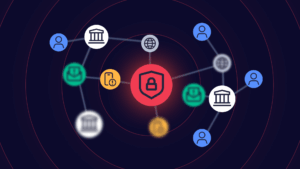
To stay ahead, institutions can leverage consortium analytics to quickly gain insight into the risk associated with payee accounts, both domestically and abroad, without sharing personally identifiable data (PII). Leveraging that data within a platform that can perform real-time analysis will