Research by FCA’s Financial Lives: 2024 Survey found that in the two years prior to 2022, 23% of UK adults struggled to access a financial product or service. Whilst there has been progress since then, with the percentage of unbanked adults in the UK dropping from 2.5% in 2017 to 1.6% in 2024, there is still much more that must be done.
Within the 1.6% of unbanked adults, 4% hail from the most deprived areas of the UK (2.5x the UK average) and 8% from among unemployed adults (5x the UK average). It’s time to turn our attention to those who have fallen through the cracks – a goal that has been recognised at a government level, evidenced through the development of a Financial Inclusion Committee, and the pending National Financial Inclusion Strategy.
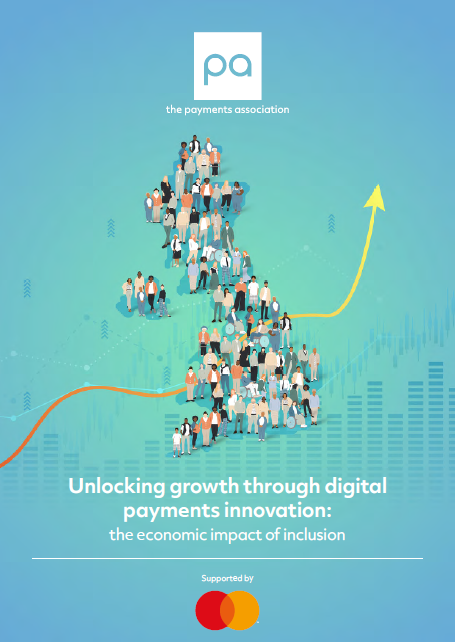
In this report – Unlocking growth through digital payments innovation: the economic impact of inclusion –from The Payments Association’s Financial Inclusion Working Group, in association with Mastercard, we spotlight some of the innovative solutions that have helped to bring more people into the fold of mainstream finances, boosting spending and general consumer wellbeing.
The report features commentary from experts and changemakers from across the payments sector and explores:
- how existing payments innovations, like pre-paid cards, are being applied to new use cases
- nascent technology such as open banking that could be expanded into wider areas of finance
- emerging solutions such as earned wage access (EWA) and workplace savings schemes, and if they should be rolled out more widely
If the UK is serious about building inclusive growth, financial inclusion must be at the heart of its agenda, and innovation is key.