
Copecto GmbH was recently nominated for The Payments Association’s Best ESG Initiative at the PAY360 Awards against well-established firms such as Worldline and Crown Agents Bank, and rising ESG stars Algbra and GoCodeGreen.
Q: What would you like the payments industry to know about your standout ESG initiative that sets Copecto apart?
Thank you for this incredible recognition! As a member of The Payments Association’s ESG Working Group, we’re honoured to be nominated among such inspiring and committed brands championing ESG in the payments industry and driving meaningful change.
At Copecto, our ESG initiative is about creating a tangible, lasting shift in how the payments industry approaches sustainability. Unlike traditional plastic-based solutions, we have pioneered premium wooden payment cards that are fully biodegradable, responsibly sourced (FSC Certified), and designed to drastically reduce the industry’s reliance on plastics.
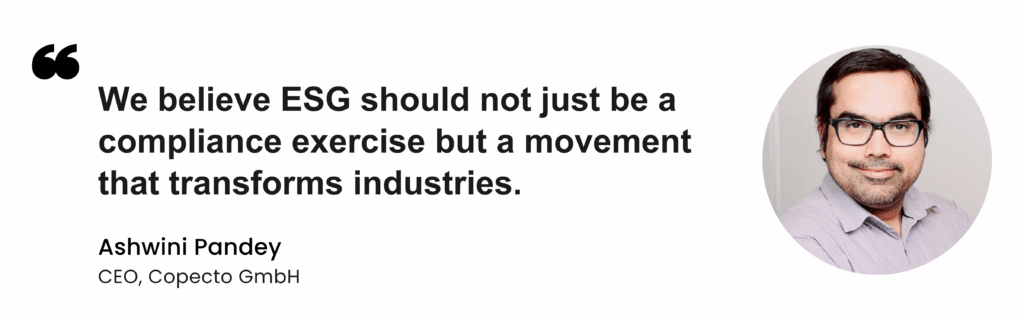
Our vision is simple yet powerful – to redefine the future of payments through sustainability, craftsmanship, and innovation. Every card we create is proof that cutting-edge payment solutions can also protect the planet and empower people.
Q: ‘Do good, use wood’ is your slogan—apart from the environmental benefits of moving away from plastic, are there any other opportunities that Copecto harnesses by using innovative card materials?
Using wood as the core material for our cards opens up measurable benefits for Copecto and its clients. For example, an independent Life Cycle Assessment (LCA) commissioned using data from our production site showed that TIMBERCARD produces 45% less CO₂ than PVC, 43% less than PLA, and 34% less than recycled PVC (rounded figures). Beyond carbon savings, compostable wood significantly reduces plastic waste and lessens pollution.
This verified data strengthens our sustainability credentials and enhances the ESG credibility of payments firms who choose to offer our transparent, environmentally responsible alternative. To date, over 350,000 TIMBERCARDs have been issued worldwide by Copecto and its parent company, DG Nexolution.
We view wood as a material that complements modern technology well. For example, we’ve developed TIMBERCARD, a digital business card that utilises the same wooden card body as our payment products but features an embedded NFC chip. It allows people to share contact details and digital profiles with just a tap to any NFC-enabled mobile device, replacing piles of paper cards and costly reprints.
The broader opportunity lies in using our cards as a model for how sustainable materials can be utilised to rethink everyday items that have traditionally been made from plastic—replacing them with something more intentional, durable, and memorable.
Q: What were the major hurdles in getting your wooden card product to market?
We weren’t the first to come up with the idea of a wooden payment card; other companies and banks have explored similar concepts before. However, wood presents significant challenges as a card material, particularly in achieving the precision, durability, and compliance required for payment cards. Previous industry initiatives have largely fallen short, with manufacturers unable to engineer wood to meet these functional standards. Consequently, most so-called “wooden cards” are in fact hybrids – either incorporating only a small percentage of wood within the card body or applying a wooden veneer over a plastic core.
Unlike these hybrid solutions, the body of our card is engineered entirely from responsibly sourced FSC-certified wood that meets the functional, regulatory, and durability standards of modern payment cards. To date, TIMBERCARD is the only payment card with a body made exclusively from wooden layers that has been certified by the VISA and Mastercard schemes.
We are proud to have successfully navigated these challenges, bridging the gap and bringing a truly sustainable and fully functional wooden payment card to market.
Q: ESG is evidently at the heart of what Copecto does, yet many firms in the industry are still reluctant to make it a priority. Why do you believe that focusing on sustainability is an advantage for payments firms?
Sustainability isn’t just a moral imperative – it’s a business differentiator. In payments, initiatives like Copecto’s TIMBERCARD help firms reduce environmental impact while standing out in a competitive market. They also build trust with eco-conscious customers and demonstrate forward-thinking leadership, showing that integrating ESG into core products can drive both loyalty and long-term growth.
We’ve found that ESG-led innovation creates real business value – initiatives like TIMBERCARD require upfront investment, but these are crucial for long-term success, as sustainable innovation takes time to translate into financial and strategic benefits. By embedding ESG across our operations, we’re not only driving innovation and optimising our supply chain today but also positioning Copecto for continued growth and leadership in a sustainable future.
Focusing on sustainability increases brand differentiation in a competitive market, helping payments firms attract customers who already value ethical practices and prepare them for shifting consumer expectations in the future. It also reduces operational risks, helping to build resilience throughout evolving regulations.
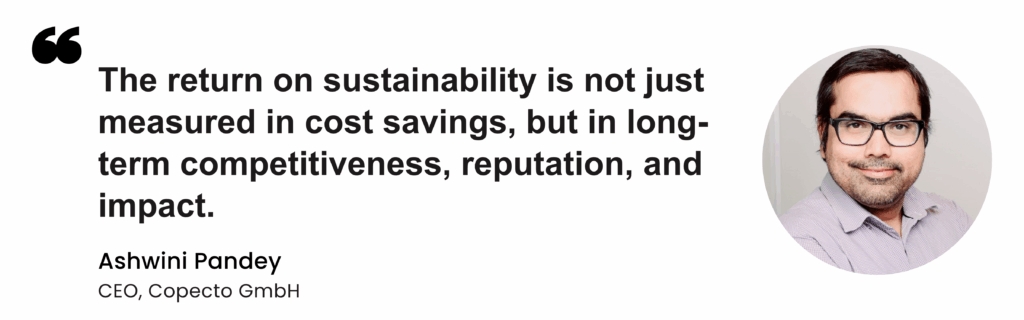
To make sustainability a true competitive advantage, transparency and accountability across the supply and value chains are not just important, but essential.
Q: As a firm that has centred ESG in its products and operations, what is your outlook for 2026? Is there anything on the horizon that you think payments firms should be aware of regarding environmental or social governance?
Heading into 2026, ESG is no longer optional—it’s expected. At Copecto, we’re focused on making TIMBERCARD accessible to the masses by building a trusted supply chain, innovating in materials and processes, and taking regional approaches to manufacturing. Payments firms should be prepared for rising regulatory demands and consumer expectations around ESG – those who act now will turn sustainability into a real competitive advantage.
Beyond regulatory compliance, customers and investors are scrutinising ESG credentials more closely and favour partners who show real commitment and measurable impact. Social governance is also becoming a key focus, with fair labour practices, diversity, and inclusion emerging as important differentiators.
Looking ahead, payments firms that proactively embed ESG will not only reduce risks but also unlock new growth through product innovation and stronger stakeholder trust. Sustainability will become an essential lens for decision-making, and those who delay risk falling behind in a rapidly evolving market.
Q: Finally, what is one easy sustainability win that you think payments firms or consumers can implement right now?
One simple sustainability win is rethinking the environmental toll of all payment methods. Many assume digital or virtual cards are automatically eco-friendly, but data centres, devices, and network energy still carry a carbon footprint. Physical cards remain highly relevant, offering tangible customer experiences, brand recognition, and usability in offline transactions, and with the global card payments market projected to grow at a CAGR of 6.9% through 2033, their importance is only increasing. Sustainable options like TIMBERCARD reduce plastic waste while delivering a product consumers value – proving that eco-friendly innovation and practicality can go hand in hand.
Payments firms can build on this by optimising manufacturing processes to minimise waste and emissions and selecting materials with verified environmental benefits. Consumers also play a vital role by recycling old cards responsibly and supporting brands committed to genuine sustainability. When both sides take these manageable steps, the payments industry can make meaningful progress towards a greener future.