
As digital money evolves, regulators and industry leaders are focused on preserving cash, choice, resilience, and financial inclusion.
Need to know
- Long before distributed ledgers or digital wallets, seashells, and then stamped metal, served as cash for millennia. Today in the UK, while physical cash endures, its use at the till is fading fast.
- Technology is driving this transformation. Policymakers, regulators, financial services providers, and end users are exploring in real time how these developments will reshape payments (our updates here). As the multi-moneyverse rapidly evolves, a pressing question arises – what place remains for physical cash?
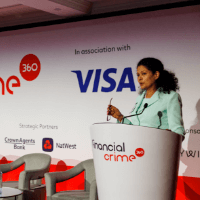
- In a recent speech, Victoria Cleland, the Bank of England’s Executive Director of Payments, argues that preserving payments choice – keeping cash viable alongside digital rails – is essential for financial inclusion, system resilience, and competition. As digital money advances, retaining fiat cash ensures no one is left behind.
Distributed ledgers and digital money
Distributed ledgers are a form of technology (DLT) whereby an asset (including different types of digital money) can be represented and transferred electronically. These digital assets can move almost instantaneously (atomically) on their electronic rails. The benefits of DLT in financial services are widely recognised, including by finance ministers and central bankers. For more background, see Digital Assets 101.
Tokenised deposits, stablecoins, and central bank digital currencies (CBDCs) are currently the predominant forms of digital money. Each has its own functional, technological, policy, and regulatory strengths and limitations, with dynamics developing swiftly. With this ebb and flow, it is probable that other forms of digital money will also evolve. For more background on digital money in capital markets, see the GFMA’s The Role of Digital Money in Capital Markets.
The case for choice
While banknotes in circulation continue to rise, paradoxically, cash usage at the till has plummeted to just 9% of 2024 UK payment volume. However, cash remains indispensable to many—for 14% it is their preferred payment method. Cash use is highest amongst the vulnerable: the unemployed, low-income households, those without formal qualifications, the digitally excluded, and seniors. UK policymakers and regulators are ensuring that access to cash is protected, including through legislation, regulation, and future plans.
The continued importance of cash feeds into Cleland’s central thesis: that preserving choice is a foundation of healthy payment systems. Choice underpins inclusion and strengthens system resilience. It creates competition, which lowers costs and drives innovation. These factors create a virtuous circle – progress must complement existing payment rails rather than replace them.
What’s next?
The payments sector is already highly competitive and technologically vibrant. DLT, digital money, and electronic payment rails have further catalysed this.
Technical but critical debates about digital money—such as the singleness of money, fractional reserve banking, functions of stablecoins, and global regulation—will continue. Meanwhile, their practical application and rapid development (such as agentic AI) will continue.
The use of physical or digital money remains a matter of ‘horses for courses’. End users will vote with their feet in deciding which part(s) of the multi-moneyverse (including cash) suit them best for each use case.
For financial services providers, the message is practical: design for optionality, engage with evolving regulation, and recognise that the future of payments is and will remain plural.