Paytiko launches Sub Hub, a subscription-management solution integrated with its payment platform to help businesses scale recurring revenues.
The global subscription economy is expected to reach $1.5 trillion by 2025, growing at more than 18% CAGR, as more businesses shift toward recurring revenue models to gain financial predictability and improve customer retention. Recognising this shift, Paytiko has launched Sub Hub, a comprehensive subscription-management interface engineered to transform how businesses offer, manage, and scale their recurring revenue streams. Whether operating in SaaS, digital media, health and wellness, fintech, or e-learning, businesses adopting Sub Hub are positioned to optimise the full lifecycle of subscription engagement—from onboarding and billing to retention and upselling.
How Sub Hub fits into Paytiko’s broader platform
Sub Hub is not a standalone tool—it is fully integrated within Paytiko’s advanced payment orchestration platform. This means subscription-based businesses benefit from intelligent payment routing, PSP flexibility, and centralised control across global markets. By combining Paytiko’s dynamic infrastructure with Sub Hub’s tailored subscription controls, merchants can unlock higher approval rates, reduce churn, automate billing, and maintain seamless compliance in an increasingly complex payments environment.
The global payment orchestration market is projected to surpass $6.5 billion by 2030, with a growing demand for integrated systems that streamline provider management, smart routing, and cross-border settlement. Sub Hub meets these needs head-on.
Key features of Sub Hub
Payment orchestration and provider routing
At its core, Sub Hub utilises smart orchestration to dynamically route subscription payments across multiple payment service providers (PSPs), banks, or acquiring partners. This results in significantly improved transaction approval rates, especially in regions with historically high failure rates. Failed transactions—whether due to insufficient funds, network errors, or card declines—are automatically retried based on predefined logic, reducing payment loss and increasing customer retention.
Tokenisation and security
Security and trust are non-negotiable in recurring payments. Sub Hub’s built-in tokenisation engine replaces sensitive payment data with secure, non-exploitable tokens, ensuring PCI DSS compliance and reducing the risk of data breaches. Tokenisation enables merchants to securely store payment credentials and reuse them for future billing—essential for any recurring payment model—while maintaining customer confidence and ensuring regulatory integrity.
Flexible payment methods
Sub Hub supports a wide range of payment methods, including credit and debit cards, bank transfers, digital wallets (such as Apple Pay, Google Pay, and PayPal), and region-specific alternative payment options. This flexibility empowers merchants to cater to local customer preferences, reduce checkout friction, and expand into new geographies without requiring extensive technical reconfiguration.
Multi-currency and global billing
Supporting customers across multiple markets often involves handling currency conversions, tax compliance, and fluctuating exchange rates. Sub Hub’s multi-currency billing engine enables merchants to accept payments in over 100 currencies, automatically managing currency presentation, conversion, and settlement. This ensures a native experience for customers while maintaining operational control for the business.
Transparency, compliance, and customer autonomy
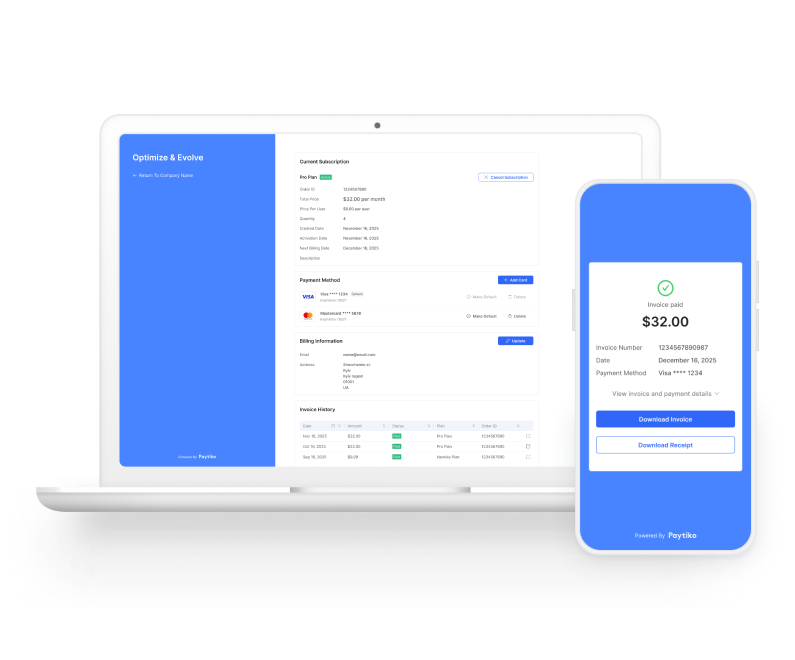
Sub Hub offers a self-service portal where customers can view their subscription details, download invoices, update payment information, or cancel/pause plans without requiring support intervention. This not only reduces operational overhead but also aligns with the growing demand for digital autonomy and transparent billing practices.
In addition, automated notifications can be configured to send alerts about expiring cards, upcoming renewals, unpaid invoices, or custom reminders—ensuring end-users remain informed and engaged.
On the compliance side, Sub Hub aligns with global data privacy laws, such as GDPR, CCPA, and PSD2, by maintaining full audit trails, ensuring secure handling of user data, and implementing adaptable retention policies for various jurisdictions.
Usage cases powered by Sub Hub
SaaS startup scaling across regions
A rapidly expanding SaaS company offering productivity and project management tools across Europe, the MENA region, and Southeast Asia can adopt Sub Hub to manage its global customer base. The platform would enable the company to offer monthly and annual billing cycles, manage multi-currency pricing, and proactively detect failed payments. By implementing Sub Hub’s retry logic and automated renewal reminders, the startup can reduce involuntary churn by over 17% and improve its annual recurring revenue (ARR) by 24% within six months. Additionally, built-in analytics would allow the finance team to identify and address specific regions with lower success rates, prompting more granular routing strategies.
Media & content subscription service
A digital publishing house with a tiered subscription model—including standard, ad-free, and premium archive access—can leverage Sub Hub to support flexible user journeys. The platform can enable free trials, tiered upgrades/downgrades, as well as subscription pauses during off-seasons or travel. Their customers could also access complete billing histories, resulting in a 30% reduction in support tickets. The introduction of local payment options in the LATAM and SEA markets would enable the company to increase subscriber conversions by up to 12%, while reducing churn by resolving billing issues autonomously.
Fitness & wellness memberships
A boutique fitness studio offering customised memberships with optional add-ons, such as personal training and spa access, can utilise Sub Hub to manage its expanding digital customer base. Members could easily pause plans for travel, upgrade packages, and receive automated reminders for expiring cards and upcoming payments. Sub Hub’s metered billing option would not allow for charges beyond package quotas, increasing customer satisfaction and providing new revenue streams. All this could potentially result in a 40% increase in self-service interactions and a measurable reduction in payment delays.
Conclusion
In a landscape where customer expectations are growing and revenue predictability is critical, subscription models offer a powerful way for businesses to scale. They enable companies to build long-term relationships, improve cash flow, and implement more effective personalisation. However, success in this model hinges on a reliable, flexible, and compliant payment infrastructure—especially as businesses expand globally and face increasing regulatory pressure.
Systems like Sub Hub are not just solving today’s operational pain points; they are redefining the standard for what modern subscription payments should look like. By combining automation, smart payment orchestration, global compatibility, and user-centric controls, Sub Hub gives businesses the foundation they need to thrive in the subscription economy. As subscriptions evolve into an essential pillar of monetisation, tools like Sub Hub ensure businesses stay resilient, agile, and customer-first in the years to come.