
By 2050, payments will be intelligent, autonomous, and embedded in daily life, powered by AI, quantum infrastructure, and trust-driven digital ecosystems.
The payments landscape is undergoing a profound transformation. What began as a shift from cash to cards, and then from cards to mobile wallets, is now accelerating toward a future defined by autonomous financial interfaces, quantum infrastructure, and AI-native ecosystems. By 2050, will we live in a world where payments are ambient, intelligent, and embedded —initiated not by users tapping screens but by AI agents acting on our behalf? How close to that future are we today? Is the gap really that far?
Think about where we have previously spoken about the technology used to send man to the moon: we have, on average, more processing power in our mobile phones than was available to successfully land a man on the moon.
Twenty-five years from now seems like quite a long time, it both is, and isn’t, 2001 saw the launch of the first iPod, just look at the advances we have made since then, so, is this sort of future in the next 25 years, really that farfetched, with the rate of change that we see, and the power of AI and automation and autonomy—well, let us take a look.
The end of the super app era, and the rise of the adaptive banking interface
The term “super app” once captured the ambition of integrating multiple financial and lifestyle services into a single mobile interface. But as generative AI platforms like ChatGPT evolve (think about the GenAI and intelligence embedded in your phones), the paradigm is shifting. OpenAI’s recent integration of third-party services—allowing users to book flights, manage tasks, and even initiate payments via conversational prompts—signals the emergence of a new model: AI-native financial agents.
These agents will not simply respond to commands; they will anticipate needs, optimise decisions, and execute transactions autonomously. The user interface will dissolve into voice, gesture, and context. Payments will become invisible yet intelligent, embedded in the flow of daily life.
Quantum-enabled infrastructure—the quantum qloud: Speed, security, scale
Underpinning this future will be quantum-enabled infrastructure. By 2050, quantum computing should be able to deliver sub-nanosecond transaction orchestration across global networks. Quantum-secured protocols will protect against next-generation cyber threats, ensuring resilience and compliance in a hyper-connected world.
Financial institutions will operate on “quantum-safe rails”, capable of processing vast volumes of payments instantaneously. The transition is already underway, with regulators and industry alliances urging early adoption of quantum-resistant cryptography to future-proof systems.
AI-powered payment intelligence
Autonomous AI agents will become the nerve centre of payment operations. These systems will continuously optimise transaction routing, detect fraud, and personalise payment experiences in real time. Leveraging deep learning and behavioural analytics, AI will adapt to emerging threats and shifting customer preferences.
Routine tasks—reconciliation, exception handling, compliance—will be fully automated. Human talent will be redeployed to strategic roles, while AI orchestrates entire payment journeys from initiation to settlement. The result: (the long talked about) hyper-personalised, frictionless experiences that anticipate and fulfil user needs.
Composable ecosystems and smart contracts
The architecture of payments will become modular and composable. Banks and fintechs will assemble services from plug-and-play financial components, integrating new methods, regulations, and value-added features without reengineering core systems.
Smart contracts (although not new—arguably these have been around in one way or another since the mid-90s) will govern the payment lifecycle, automating initiation, optimising scheme and currency choices, settlement, and dispute resolution. These self-executing agreements will enable conditional payments—such as releasing funds upon delivery confirmation—while maintaining an immutable audit trail (after all, blockchain isn’t new either—it was conceptualised in the early 90s). This will streamline cross-border transfers, reduce costs, and unlock new and as yet undetermined digital business models.
Ambient payments and XR integration
By 2050, payments will be ambient and context-aware. IoT-enabled devices—from wearables to vehicles (think about it—both exist today, with in-car payments and many of us wearing watches that can facilitate this)—will initiate and settle transactions autonomously. A smart fridge might reorder groceries and pay suppliers; a connected car might handle tolls, charging, and insurance without user input.
Extended reality (XR) will redefine payment design and experience. Consumers will transact within immersive environments—virtual stores, games, or workspaces—without leaving the interface (the continued rise of embedded finance). Payment providers will need to deliver secure, interoperable solutions that blend seamlessly into these digital worlds.
Neuro-ID and biometric trust
Authentication will be frictionless and deeply personal. Neuro-ID—based on unique brainwave patterns—will complement biometrics to create multi-layered identity verification. Payments will be authorised by thought, gesture, or presence, eliminating passwords and fraud.
This fusion of identity and intent will underpin trust in a decentralised, AI-driven payment landscape. Trust will no longer be implied; it will become a currency. We will see the inception of trust as a currency, enabling us to transact more freely and efficiently – the combination of “DeFi” and “TradFi”
Sustainable payment engines
Sustainability will no longer be a “nice to have”—ESG will be embedded in every transaction. Payment platforms will operate on carbon-neutral infrastructure, optimised by green AI algorithms. ESG standards will drive innovation, with digital cards, virtual POS systems, and carbon calculators becoming standard.
Global mesh payment grid
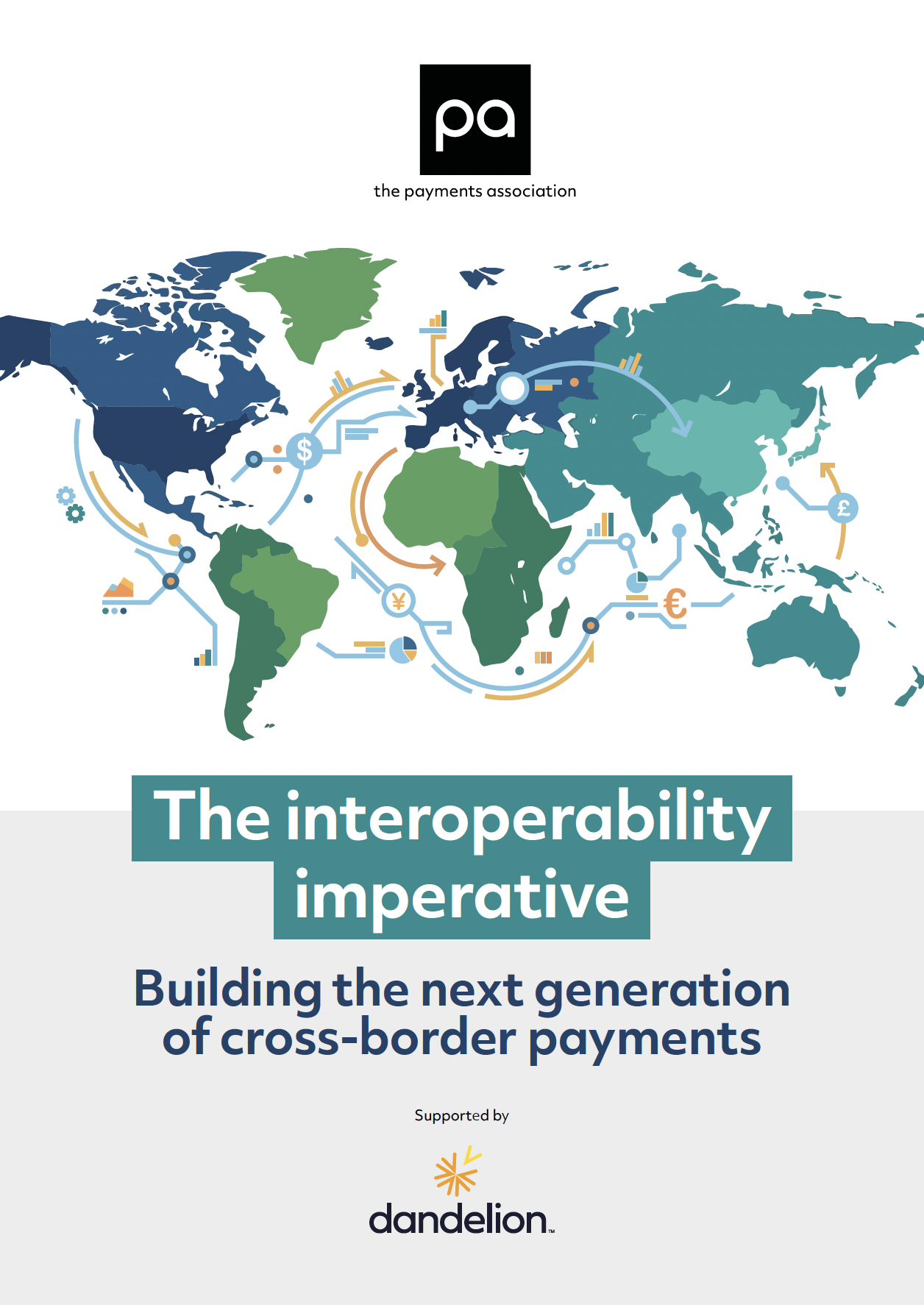
Instant payments, which gave rise to “instant everything”, made the world a smaller place (BIS and its work on Project Nexus are already looking at how this can be achieved). Is it folly to think that a decentralised, borderless payment grid will connect digital currencies, programmable money, and real-time settlement systems? These will all blur into “currency”; there will be no need to define Pound, Dollar, Yen, or Stablecoin. Powered by distributed ledgers, this mesh will dissolve traditional barriers—enabling instant, fee-free transactions across jurisdictions, settling in whichever currency the sender and ultimate beneficiary want, on that given day, for that given moment, for that given transaction on that given exchange of goods and services.
The grid will support financial inclusion, economic growth, and resilience, setting new standards for trust and efficiency in global commerce.
Conclusion: Redefining the interface of trust
The future of payments will not be defined by apps, cards, or wallets—but by intelligent agents, quantum infrastructure, and contextual experiences. The “super app” will give way to autonomous financial interfaces that operate invisibly, securely, and intuitively.
Banks, fintechs, and regulators must prepare for a future where trust, intelligence, and adaptability are the new currency. The winners in 2050 will be those who embed themselves into this AI-native payment fabric—offering secure, sustainable, and personalised experiences that move at the speed of thought.